

Table of Contents
- What Dialing In Espresso Actually Means
- What You'll Need Before Your First Shot
- Espresso Brew Ratio Explained: Start With 1:2
- Step 1: Set Your Grind and Pull a Baseline Shot
- Step 2: Taste and Adjust One Variable at a Time
- Best Coffee Beans for Home Espresso
- Espresso Extraction Troubleshooting Guide
- Step 3: Lock In Your Recipe and Repeat It
- Frequently Asked Questions
Last Updated: October 13, 2026
What Dialing In Espresso Actually Means
Learning how to dial in espresso at home comes down to one idea: you adjust your grinder and your recipe until the shot tastes good, then you repeat it.
Dialing in espresso is the process of adjusting grind size, dose, and yield until a shot tastes balanced instead of sour or bitter.
Here's what most guides get wrong: they hand you ten variables at once. You only need three.
The Three Variables You Control
- Grind size: how fine or coarse the coffee is
- Dose: how many grams of coffee go in the basket
- Yield: how many grams of espresso come out
Everything else, from roast level to brew ratio, sits on top of these three. Master them and the rest gets easy.
What You'll Need Before Your First Shot
You need four things before you pull a single shot: fresh whole-bean coffee, a burr grinder, a digital scale, and an espresso machine. Skip any one of these and you're guessing.

A quick rundown of the starter kit:
- Burr grinder. Blade grinders chop unevenly, which makes consistent shots impossible.
- Digital scale. Weighs to 0.1 grams. A kitchen scale works fine.
- Whole beans with a roast date. Ground coffee goes stale fast.
The grinder matters most. As Specialty Coffee Association guidance on grinding notes, grind consistency drives extraction more than almost any other factor.
Espresso Brew Ratio Explained: Start With 1:2
The standard starting point is a 1:2 brew ratio: 18 grams of coffee in, 36 grams of espresso out. This ratio gives you a balanced shot with most beans.
Espresso brew ratio is the relationship between the weight of dry coffee you use and the weight of liquid espresso you get.
So if you dose 18 grams, you're aiming for 36 grams in the cup. That's your baseline.
Why 1:2 Is the Default, Not the Rule
A 1:2 ratio is a starting line, not a finish line. Lighter roasts often taste better closer to 1:2.5 or 1:3. Darker roasts can shine at 1:1.5.
| Roast Level | Starting Ratio | Typical Shot Time |
|---|---|---|
| Light roast | 1:2.5 | 28-32 seconds |
| Medium roast | 1:2 | 25-30 seconds |
| Dark roast | 1:1.5 to 1:2 | 22-28 seconds |
Treat these as launch points. Your taste buds make the final call.
Step 1: Set Your Grind and Pull a Baseline Shot
Set your grinder to a medium-fine setting, dose 18 grams, and pull a shot. Don't chase perfection yet. You're collecting information, not judging a final product.
Here's the process:
- Weigh 18 grams of beans and grind them.
- Level the grounds and tamp straight down.
- Place your cup on the scale and tare it to zero.
- Start the shot and stop it at 36 grams.
- Write down the total time.
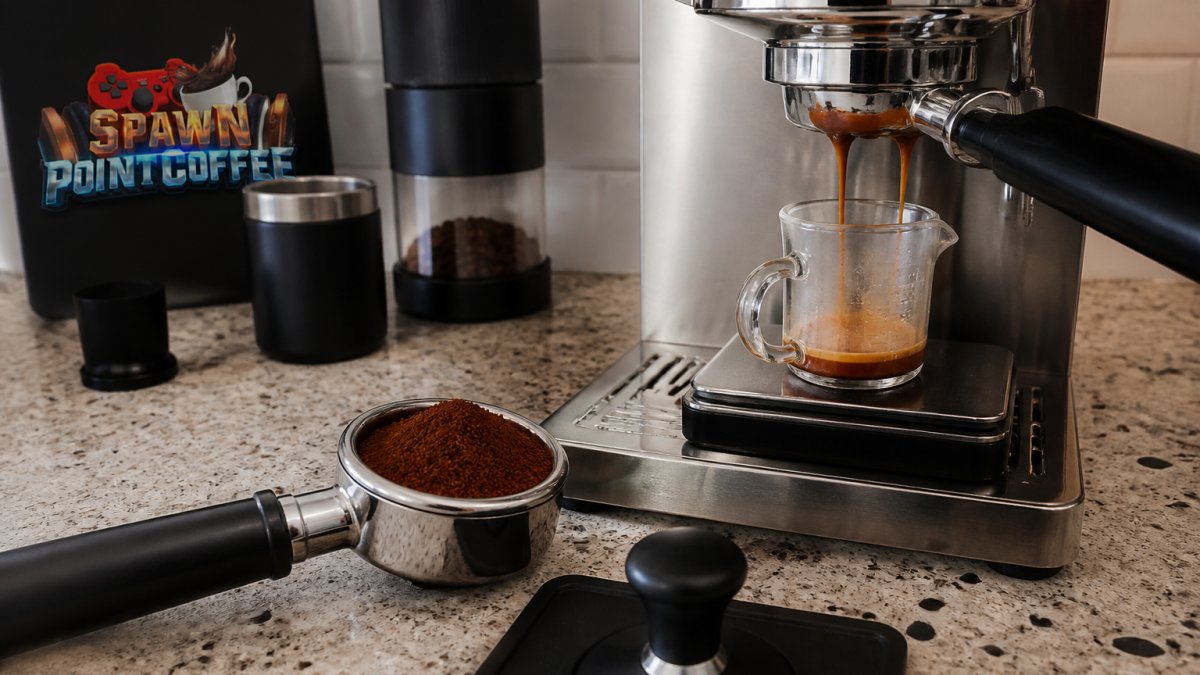
If the shot runs in 25 to 30 seconds, your grind is close. If it gushes out in 15 seconds, grind finer. If it drips out past 40 seconds, grind coarser.
The Baseline Comparison Worksheet
Most guides tell you to taste the shot. Few tell you how to compare shots in a way that actually teaches you something. Use this simple four-line worksheet for every shot you pull:
| Line | What to Record | Why It Matters |
|---|---|---|
| Aroma | One word: nutty, fruity, smoky, flat | Tells you if the beans are fresh and what direction the roast leans |
| Acidity | Low, medium, high | High acidity often reads as sour; low acidity often reads as flat |
| Body | Thin, medium, syrupy | Body tracks dose and yield more than grind |
| Aftertaste | Clean, dry, harsh, sweet | The finish is where over-extraction shows up first |
Pull two shots back to back with the same settings. If they taste different, your technique or your grinder is inconsistent, fix that before you change the recipe. If they taste the same, you have a reliable baseline and can start adjusting one variable.
Why This Step Matters More Than the Recipe
A baseline shot is not supposed to be delicious. It is supposed to be repeatable. Once you can pull the same shot twice, every change you make after that is a real experiment instead of a guess. That is the difference between dialing in and hoping.
Step 2: Taste and Adjust One Variable at a Time
Taste the shot before you change anything. Sour and thin means under-extracted. Bitter and harsh means over-extracted. Balanced means you're done.
This is the part most people rush. Change one thing, then pull another shot. If you change grind and dose together, you learn nothing.
Triumph & Glory Adventurer's Espresso Supremo | Italian Roast | Whole Bean →
A simple rule to follow:
- Sour or sharp? Grind finer.
- Bitter or dry? Grind coarser.
- Close but weak? Increase your dose slightly.
Keep your ratio and shot time steady while you adjust grind. Once the taste lands where you want it, you're dialed in.
Best Coffee Beans for Home Espresso
The best coffee beans for home espresso are fresh whole beans with a printed roast date, ideally roasted within the last two to four weeks. Freshness beats origin, and origin beats price. But "buy fresh beans" is only useful if you know how to read a label and how much to buy, so here is the practical version.
How to Read a Coffee Label in 30 Seconds
- Roast date vs. best-by date. A roast date tells you when the beans were roasted. A best-by date tells you almost nothing, because it is usually set months out and says nothing about when the coffee peaked. If a bag only has a best-by date, treat it as a warning sign.
- Whole bean vs. pre-ground. Ground coffee loses its aromatics within days because the surface area exposed to oxygen is enormous. Whole bean keeps its edge for weeks in a sealed container. For espresso, whole bean is not optional, you need to control the grind.
- Roast level. Medium and dark roasts pull more consistently on home machines because they are more soluble and more forgiving of small temperature and grind errors. Lighter roasts demand tighter grind control and better temperature stability, which is a harder place to start.
A Simple Bean Decision Tree
Start with what you already know about your taste and your gear:
- Do you like milk drinks? Choose a medium or dark roast with chocolate, caramel, or nut notes. These hold up against milk.
- Do you drink it straight? A medium roast with fruit or citrus notes gives you more to taste without demanding perfect technique.
- Is your machine a basic single-boiler or a pressurized basket model? Stay with medium to dark roasts. They are more forgiving when temperature swings are wider.
- Do you have a burr grinder with fine adjustment? You can experiment with lighter roasts. Without one, lighter roasts will fight you.
- Are you still learning? Buy one bag, not three. Learn it fully before you switch.
How Much to Buy and How to Avoid Wasting Beans
A one-pound bag lasts most home brewers about two weeks at one or two shots a day, which is roughly when flavor starts dropping off. Buy in one-pound increments, not five-pound bulk, until you know what you like.
A low-cost tasting plan: buy two small bags of different roast levels or origins, pull them side by side over a week, and note which one you reach for first.
Storage That Matches Your Consumption Rate
USDA guidance on coffee storage recommends keeping beans away from heat, light, and moisture. A sealed container in a cool cupboard beats a hopper every time, because a hopper exposes beans to air on every refill. If you buy a one-pound bag and finish it in two weeks, a simple airtight container is enough. If you buy more, split it and keep the extra sealed and cool.
Espresso Extraction Troubleshooting Guide
An espresso extraction troubleshooting guide saves you from dumping shot after shot. Match the symptom to the fix and you'll solve most problems in two pulls.
Fast, Sour Shots
A shot that finishes under 20 seconds and tastes sour is under-extracted. The water rushed through too fast and didn't pull out the sweetness.
Fixes:
- Grind finer, one step at a time
- Increase your dose by half a gram
- Check that your tamp is level
Slow, Bitter Shots
A shot that takes over 35 seconds and tastes bitter is over-extracted. The water stayed too long and pulled out harsh compounds.
Fixes:
- Grind coarser
- Lower your dose slightly
- Check for a clogged basket
| Symptom | Likely Cause | Fix |
|---|---|---|
| Sour, thin, fast | Grind too coarse | Grind finer |
| Bitter, harsh, slow | Grind too fine | Grind coarser |
| Weak but balanced | Dose too low | Add 0.5g |
| Gushing, no crema | Stale beans | Buy fresher coffee |
Step 3: Lock In Your Recipe and Repeat It
Write down your final recipe: dose, yield, grind setting, and shot time. That's your reference point for every future bag.
A repeatable recipe looks like this:
- Dose: 18 grams
- Yield: 36 grams
- Time: 27 seconds
- Grind setting: 4 on your grinder
Every new bag of beans will need small tweaks. That's normal. Beans age, humidity shifts, and grinders drift. But once you have a baseline, you're adjusting from a known point instead of starting over.
Frequently Asked Questions
How do I know if my espresso is dialed in correctly?
A dialed-in shot hits your target yield within a few grams of your planned time and tastes balanced: sweetness up front, acidity in the middle, and a clean finish with no harsh bitterness or sharp sourness. Weigh your dose and yield on a scale, note the shot time, then taste. If the flavor is pleasant and the numbers repeat shot after shot, you are dialed in.
Does grind size affect espresso extraction?
Grind size is the single biggest lever you have. Finer grinds slow the water down, raising pressure and pulling more bitterness and body into the cup. Coarser grinds speed water through, leaving shots thin and sour. Move the grinder one small step at a time, pull a shot, taste, and repeat. Change nothing else while you test so you can tell what the grind actually did.
How much coffee should I use for a double shot of espresso?
Most home setups use 18 grams of ground coffee in a double basket, yielding roughly 36 grams of liquid espresso in 25 to 30 seconds. That is the classic 1:2 brew ratio. Baskets vary, so check what yours holds: a 16-gram basket calls for 16 grams in and about 32 grams out. Weigh both sides every time rather than eyeballing the dose.
Can any coffee bean be used for espresso?
Any coffee can be brewed as espresso, but dark and medium roasts built for espresso pull more consistently and give you the caramel, chocolate, and smoky notes most people expect from a shot. Dark Italian and French roasts, like those in a dedicated espresso blend, are forgiving while you learn. Very light roasts demand a finer grind and more precision, which makes them harder to dial in as a beginner.
Dialing in espresso at home is a skill you build one shot at a time, and it gets easier with beans you can trust. Spawn Point Coffee roasts on demand, so your bag arrives fresh instead of sitting on a shelf for months. Choose from single-origin beans, bold blends, and flavored coffees in whole bean, ground, or pod form, all built for gamers who want reliable fuel without the guesswork. Get started with Spawn Point Coffee and pull your best shot yet.