

Table of Contents
- The Verdict: When Cold Brew Coffee Is Worth It
- Cold Brew vs Iced Coffee: Not the Same Drink
- How to Make Cold Brew Coffee at Home
- The Cold Brew Coffee Ratio That Actually Works
- How Long to Steep Cold Brew for the Best Flavor
- Cost, Storage, and Shelf Life: The Practical Math
- Common Mistakes That Ruin a Batch
- Conclusion
- Frequently Asked Questions
Last Updated: October 13, 2026
The Verdict: When Cold Brew Coffee Is Worth It
Cold brew coffee is worth the effort if you drink iced coffee more than twice a week and want a smoother, lower-acid cup you can batch on a Sunday.
Cold brew is a time investment, not a skill test: you grind, combine, and wait.
Below, we break down the real differences, the ratio that works, and the mistakes that ruin a batch, plus where a good medium roast, like our R.P.G. Grinder Colombian, fits in.

Cold Brew vs Iced Coffee: Not the Same Drink
Cold brew and iced coffee are different drinks made by different methods. Iced coffee is hot-brewed coffee chilled and poured over ice.
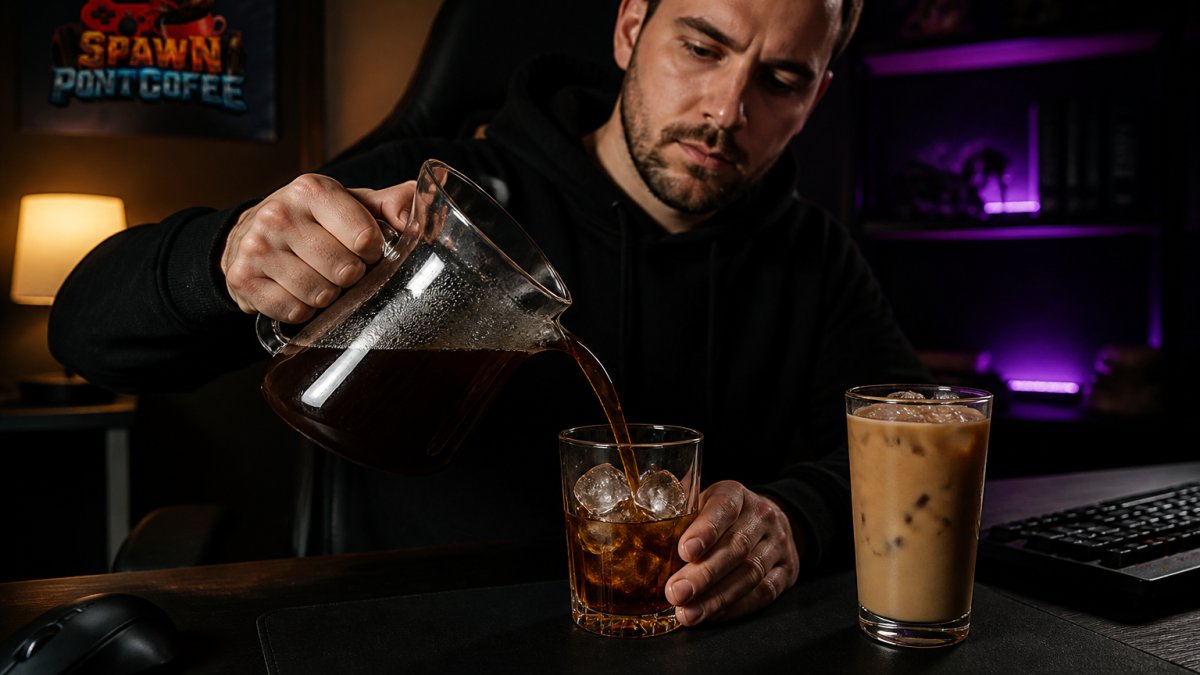
That difference explains the rest. Heat pulls out acids and oils fast, so hot coffee tastes sharp or bitter as it cools; cold water extracts slowly, giving a rounder, sweeter flavor with less bite.
The trade-off is strength and body: cold brew lands heavier and more chocolatey, while iced coffee keeps more bright, fruity notes. Neither is better, they suit different moods.
How to Make Cold Brew Coffee at Home
Making cold brew coffee at home takes about 10 minutes of active work and 12 to 18 hours of waiting, simple enough for a first-timer to nail on the first batch.
Here is the basic method:
- Grind 1 cup of coffee to a coarse setting, like sea salt.
- Add the grounds to a large jar or pitcher.
- Pour in 4 cups of cold, filtered water.
- Stir gently to make sure all grounds are wet.
- Cover and let it sit at room temperature or in the fridge for 12 to 18 hours.
- Strain through a fine mesh sieve lined with a coffee filter or cheesecloth.
- Store the concentrate in a sealed container in the fridge.
What You'll Need Before You Start
You do not need fancy gear, but a few items help. A large mason jar or pitcher holds a full batch, a fine mesh sieve or nut milk bag handles straining, and a burr grinder gives a consistent coarse grind, uneven grounds mean some coffee over-extracts while the rest stays weak.
Whole bean coffee is the better starting point because it stays fresh longer. Our R. P. G. Grinder Single Origin Colombian Whole Bean is a medium roast with caramel sweetness and whispers of chocolate that holds up well in a cold steep.
The Cold Brew Coffee Ratio That Actually Works
The cold brew coffee ratio that works for most people is 1 part coffee to 4 parts water by weight for a concentrate, or 1 to 8 for a ready-to-drink brew.
That ratio gives a strong concentrate you can cut with water, milk, or oat milk later. To skip dilution, go 1:8 and drink it straight. The table below compares the common ratios and what each yields.
| Ratio (coffee:water by weight) | Strength | Best For | Dilution | Approx. Yield From 1 lb Beans |
|---|---|---|---|---|
| 1:4 | Concentrate | Batch brewing, mixing | 1:1 with water or milk | About 8 cups concentrate |
| 1:5 | Medium-strong | Iced lattes | Splash of milk | About 10 cups concentrate |
| 1:8 | Ready to drink | Grab-and-go | None needed | About 16 cups |
| 1:12 | Light | Slow sipping | None needed | About 24 cups |
Adjusting the Ratio by Roast Level
Roast level shifts how much coffee you should load into the same water.
- Medium roasts sit at the baseline: start at 1:4 for concentrate. They are denser, hold up to a long steep without turning woody, and are the safest first batch.
- Dark roasts extract faster because the roasting process has already broken down much of the bean structure and brought oils to the surface. Drop to 1:5 or 1:6 for the same strength, and pull the steep two to three hours early. Brew a dark roast at 1:4 for 18 hours and you will usually get a harsh, ashy cup.
- Light roasts are denser and resist extraction. Tighten toward 1:3.5 and add two to four hours of steep time for the same body. They carry more bright, fruity acidity that survives a cold steep, so they shine at a lighter final dilution.
A practical way to think about it: darker roast, less coffee and less time; lighter roast, more coffee and more time. The water amount stays roughly the same.
Scaling the Batch Without Breaking It
The ratio scales linearly. For a 1:4 concentrate using 4 cups of water, use about 1 cup of grounds by weight, roughly 3.5 to 4 ounces.
Treat these numbers as starting points, not law. If a batch tastes weak, tighten the ratio by half a part next time; if it tastes harsh, add water or shorten the steep. Adjust one variable at a time and keep notes.
How Long to Steep Cold Brew for the Best Flavor
Steep cold brew for 12 to 18 hours for the best balance of flavor and strength.
Twelve hours is the sweet spot for a medium roast; sixteen adds more body and sweetness. Past 20 hours the cup turns harsh.
R. P. G. Grinder Coffee Brew | Single Origin Colombian Coffee | Whole Bean →
Fridge steeping is slower and more forgiving, closer to 18 hours, but cleaner and smoother. For a first batch, steep in the fridge and taste at 14 hours.
Cost, Storage, and Shelf Life: The Practical Math
Cold brew concentrate keeps in the fridge for up to two weeks in a sealed container, and ready-to-drink cold brew lasts about three to four days. That shelf life is the strongest argument for the effort, but only if you store it correctly.
Why Cold Brew Lasts Longer Than Hot Coffee
Hot brewing pulls oils and acids into the cup, and those compounds oxidize the moment coffee hits air. Cold water extracts fewer reactive oils, so there is less material to go stale, that is the mechanism behind the two-week window.
Oxidation is the enemy: every time you open the container, fresh oxygen hits the surface and the clock restarts. A narrow-mouth bottle with less headspace slows that down, and an opaque or amber container beats clear glass on a bright shelf.
Storage by Vessel
| Vessel | Typical Fridge Life | Notes |
|---|---|---|
| Sealed glass bottle, narrow mouth | Up to 2 weeks | Best all-around; minimal headspace |
| Mason jar with tight lid | 10 to 14 days | Fine if kept toward the back of the fridge |
| Wide pitcher | 7 to 10 days | More surface area, faster oxidation |
| Open or loosely covered | 2 to 3 days | Not recommended |
Keep the container toward the back of the fridge, away from the door, where temperature swings least, and label the date. If the brew tastes flat or papery, it has oxidized, not spoiled, but past its best.
Roast Level Changes Shelf Life
Dark roasts go stale faster than medium or light roasts, both as beans and as concentrate. Roasting brings oils to the surface, and those oils oxidize quickly once exposed to air. A dark roast concentrate may taste flat by day seven, while a medium roast holds its character closer to two weeks.
Medium roasts sit in the sweet spot for batch brewing: enough body to survive a long steep and enough stability to stay good through the week. A medium roast like our Gamer Till the End Kenya AA brings balanced acidity with berry and citrus notes that stay lively after a few days in the fridge, a strong pick for a Sunday batch you drink through Friday.

The Cost Side
The math favors home brewing once you drink iced coffee regularly. A single bag of whole bean coffee makes several batches of concentrate, each yielding multiple servings once diluted. Over a month, home brewing usually costs less than a daily coffee shop habit, and you control the strength and sweetness. Savings grow the more people you brew for, since the only added cost is a bigger jar.
Common Mistakes That Ruin a Batch
Most bad cold brew comes down to grind size, timing, or water. Fix those three and batches improve fast.
- Grinding too fine. Fine grounds clog filters and turn the brew bitter. Aim for coarse, like raw sugar.
- Skipping the filter. A quick sieve leaves silt in the cup. Line it with a paper filter for a cleaner result.
- Using tap water. Chlorine and minerals flatten the flavor. Filtered water makes a real difference.
- Steeping too long. More time is not more flavor. Past 20 hours, you get bitterness, not depth.
- Forgetting to dilute. Drinking concentrate straight tastes overwhelming. Cut it before you pour.
Here is how to match each problem to its fix.
| Problem | Likely Cause | Fix |
|---|---|---|
| Bitter, harsh taste | Over-steeping or fine grind | Shorten steep, grind coarser |
| Weak, watery cup | Too little coffee | Tighten ratio toward 1:4 |
| Gritty texture | Poor straining | Use paper filter or nut milk bag |
| Flat flavor | Tap water | Switch to filtered water |
| Sour notes | Warm room, long counter steep | Move to fridge |
Conclusion
The real challenge with cold brew is not the recipe but the habit. Once a batch is in the fridge, the payoff shows up every morning you skip the coffee line, the method rewards planning, and the results hold for days.
At Spawn Point Coffee, we roast on demand so your beans arrive fresh, which matters most for a cold steep where there is no heat to cover flaws. Our single-origin and blend lineup gives you whole bean, ground, and pod options, plus the mugs and tumblers to carry your brew through a long session.
Frequently Asked Questions
Is cold brew coffee worth the effort compared to buying it?
It depends on how much you drink. A 16 oz bag of whole bean coffee like Spawn Point's R.P.G. Grinder runs $20.96 and makes roughly 8 to 10 servings of concentrate, while a single cafe cold brew typically costs $4 to $6. If you drink cold brew several times a week, the home version pays for itself within a couple of weeks. If you only want it occasionally, buying a cup is simpler.
How long does homemade cold brew last in the refrigerator?
Stored in a sealed container, cold brew concentrate keeps for up to two weeks in the refrigerator, and ready-to-drink cold brew lasts about three to four days. Keep it away from strong-smelling foods, since coffee absorbs odors. Label the container with the brew date so you are not guessing later.
Can you make cold brew with regular ground coffee?
Yes, but grind size matters. Pre-ground coffee from a grocery store is usually too fine for cold brew and can clog your filter or leave silt in the cup. A coarse grind, similar to sea salt, extracts more evenly over a long steep. If you buy whole bean, grind it coarse at home right before brewing for the cleanest result.
Does cold brew taste less bitter than hot coffee?
Cold brew usually tastes smoother and less acidic because cold water extracts fewer of the compounds that create bitterness. The lower acidity is why many people who find hot coffee harsh can drink cold brew without issue. Flavor still depends on the bean: a medium roast like Spawn Point's Gamer Till the End Kenya AA brings berry and citrus notes that stay bright even when brewed cold.
Is cold brew better than iced coffee for long gaming sessions?
Cold brew concentrate gives you more control over strength, which helps during an eight-hour stream. You can dilute a small amount into a tall glass and sip slowly instead of drinking multiple cups of hot coffee. Iced coffee is brewed hot and chilled, so it tends to taste more acidic and gets watery as the ice melts. Cold brew holds its flavor better over time.