

Table of Contents
- Why Natural Energy Beats the Crash for Gamers
- Nootropics for Gaming Focus: What Actually Works
- Clean Energy Drinks for Gamers: What to Look For
- How to Improve Reaction Time Naturally
- Circadian Rhythm and Sleep Hygiene for Late-Night Gamers
- Budget-Friendly DIY Natural Energy Recipes for Gamers
- Conclusion: Building Your Natural Energy Routine
- Frequently Asked Questions
Last Updated: September 24, 2026
Why Natural Energy Beats the Crash for Gamers
Most energy drinks give you a spike, then drop you. That crash hits right when you need steady focus the most. This guide from Spawn Point Coffee breaks down natural energy alternatives for gamers, so you can stay sharp through long sessions without the jitters.
The problem is simple. Many drinks load up on sugar and caffeine. Your blood sugar spikes fast, then falls just as fast. That drop brings shaky hands, foggy thinking, and slow reaction time.
Natural energy works differently. It comes from sources like green tea, yerba mate, and plant-based compounds that release energy slowly. The goal is sustained energy, not a quick burst.
Below, we'll show you exactly how to build a routine that keeps you locked in.
Nootropics for Gaming Focus: What Actually Works
Nootropics are substances that may support cognitive function, focus, and mental clarity. Some gamers turn to them for an edge during ranked play. The honest answer is that a handful have real mechanistic support, and most of the rest are marketing dressed up as neuroscience. This section breaks down what the research actually points to, so you can tell the difference.
L-Theanine and Caffeine: The Evidence-Based Pairing
L-Theanine is an amino acid found almost exclusively in tea leaves, especially green tea and matcha. It crosses the blood-brain barrier and appears to modulate alpha-wave activity, which is associated with a relaxed-but-alert state. When paired with caffeine, the two compounds seem to smooth out the sharp edges of each other: caffeine blocks adenosine receptors to reduce the feeling of tiredness, while L-theanine may soften the jittery, anxious side of that stimulation.
The commonly cited ratio in tea is roughly 1:1 to 2:1 L-theanine to caffeine, which is why a cup of green tea feels different from a shot of espresso even at similar caffeine levels. A typical 8 oz cup of green tea contains about 25-50 mg of caffeine and 5-20 mg of L-Theanine, depending on the leaf and steep time. Matcha, because you consume the whole leaf, tends to land on the higher end of both.
For gamers, the practical takeaway is timing. L-Theanine is usually taken 30-60 minutes before a session, and the effect is subtle, it is not a stimulant, it is a modulator. If you want the calm-focus effect without brewing tea, a plain L-Theanine capsule paired with your normal coffee is the most direct route.
Adaptogens: Ashwagandha, Rhodiola, and Ginseng
Adaptogens are plants that may help the body modulate its stress response. The three most common in gaming-focused blends are ashwagandha, rhodiola, and ginseng, and they do not work the same way.
- Ashwagandha (Withania somnifera) is typically used for calm and stress resilience. Most traditional use centers on the root, and it is usually taken daily rather than acutely, it is not a 'take it and feel it in 20 minutes' compound.
- Rhodiola rosea is more often used for mental fatigue during long cognitive tasks. It is commonly taken in the morning or early afternoon because some users report it feels mildly activating.
- Panax ginseng has a long history in energy blends and is often standardized to ginsenosides. It tends to be the most 'stimulating' of the three for many people.
A common pattern is that adaptogens help most when stress is already high, exam weeks, ranked grinds, poor sleep stretches. If you are already well-rested and calm, the effect is usually much smaller. Treat them as support for a system that already needs sleep, water, and food to work, not as a shortcut around those basics.
What the Label Won't Tell You
Two things matter more than the ingredient name on a nootropic blend. First, standardization: 'ashwagandha extract' means little without knowing the withanolide percentage, and 'rhodiola' means little without the rosavin and salidroside content. Second, proprietary blends: when a label lists a 'focus matrix' with a total milligram amount and no per-ingredient breakdown, you cannot tell whether the active compound is dosed meaningfully or just present for the label.
Clean Energy Drinks for Gamers: What to Look For
A clean energy drink for gamers avoids artificial flavors and heavy sugar loads, and leans on natural sources like green tea and plant-based ingredients. But 'clean' is a marketing word, not a regulated one. The label is where the real story is, and most guides stop at the front of the can.
Check the label for these:
- Natural caffeine from tea, coffee, or guayusa, not synthetic caffeine anhydrous
- No artificial flavors or colors
- Low or no added sugar
- Added electrolytes (sodium, potassium, magnesium) for hydration
- B-vitamins for normal energy metabolism
- Per-ingredient doses, not a proprietary blend
Sugar-Free vs. Natural Sweeteners: What the Label Hides
Sugar-free does not always mean better, and 'natural' does not always mean metabolically neutral. The sweetener choice changes how the drink behaves in your body, and the difference is worth understanding before you buy a case.
Caffeine Content and Timing
A 16 oz can of a typical gaming energy drink can range from about 100 mg to over 300 mg of caffeine. For reference, an 8 oz cup of coffee is roughly 95 mg. The FDA has noted that most healthy adults can consume up to about 400 mg of caffeine per day without generally negative effects, but sensitivity varies widely, and the half-life of caffeine is around 5 hours, meaning a 200 mg drink at 8 PM still has roughly 100 mg circulating at 1 AM.
How to Improve Reaction Time Naturally
To improve reaction time naturally, focus on hydration, sleep, and steady fuel. These basics beat any single supplement.
Try these steps:
- Drink water before and during play
- Keep electrolytes balanced
- Eat protein to steady blood sugar
- Take short breaks every hour
- Sleep on a set schedule
None of this is flashy. But it works.
Hydration and Electrolyte Balance for Competitive Play
Electrolytes are minerals that help your nerves and muscles fire correctly. When they run low, reaction time and focus drop.
Add electrolytes through:
- A pinch of salt in water
- Coconut water
- Electrolyte tablets
Better hydration supports concentration and endurance during long matches.
Circadian Rhythm and Sleep Hygiene for Late-Night Gamers
Your circadian rhythm is your body's internal clock. It controls when you feel alert and when you feel tired.
To protect your rhythm:
- Keep a consistent sleep and wake time
- Dim screens an hour before bed
- Avoid caffeine within six hours of sleep
- Get daylight early in the day
Budget-Friendly DIY Natural Energy Recipes for Gamers
You do not need pricey supplements to get clean energy. A few simple recipes cover most of what you need.
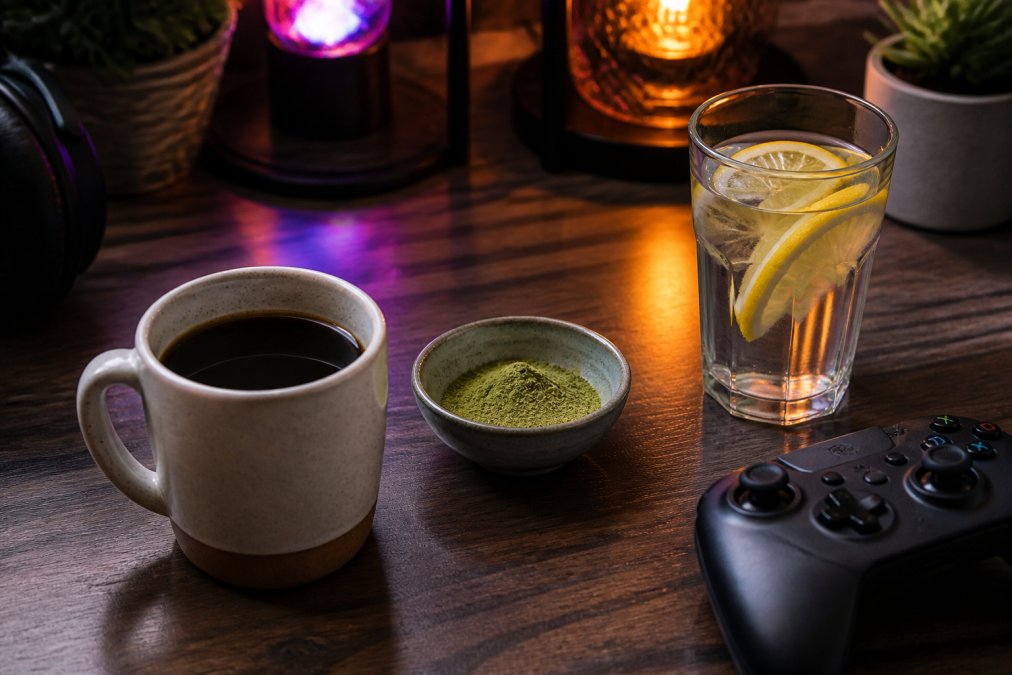
Try these:
- Matcha water: whisk matcha into cold water for calm focus
- Yerba mate tea: brew and sip for steady alertness
- Coffee plus green tea: pair for smooth, sustained energy
- Lemon electrolyte water: add salt and lemon to cold water
| Recipe | Main Ingredient | Best For | Effort |
|---|---|---|---|
| Matcha water | Matcha powder | Calm focus | Low |
| Yerba mate tea | Yerba mate leaves | Steady alertness | Low |
| Coffee plus green tea | Coffee and tea | Sustained energy | Low |
| Lemon electrolyte water | Salt and lemon | Hydration | Low |
Conclusion: Building Your Natural Energy Routine
Natural energy is not one magic drink. It's a routine: hydration, sleep, steady fuel, and smart caffeine.
Frequently Asked Questions
What are the best natural energy sources for long gaming sessions?
The most reliable options combine caffeine with L-theanine, found in green tea and yerba mate, for smooth focus without jitters. Adaptogens like rhodiola and ashwagandha help manage stress during ranked matches. For sustained energy, pair these with electrolytes and complex carbohydrates. Coffee remains a top choice because it delivers caffeine alongside antioxidants, and you can control the dose to match your session length.
Do natural energy alternatives actually improve gaming reaction time?
Research on caffeine and L-theanine shows measurable improvements in attention and reaction time. Hydration plays a role too; even mild dehydration slows cognitive function. Nootropics like citicoline have shown promise for mental clarity, though results vary. The key is consistency: a steady intake of water, electrolytes, and moderate caffeine supports faster responses better than a single large dose.
How can gamers avoid the crash associated with traditional energy drinks?
The crash comes from rapid spikes in blood sugar and caffeine. Choose drinks with little to no added sugar, and pair caffeine with L-theanine to smooth the absorption curve. Eating protein or healthy fats alongside your drink slows caffeine metabolism. Spacing your intake, such as sipping coffee over an hour instead of chugging it, also prevents the sharp drop that kills your focus mid-match.
Is coffee a good natural energy alternative for streamers?
Coffee is one of the most effective options for streamers because it provides a reliable caffeine dose, antioxidants, and B-vitamins that support metabolism. It is also flexible: you can drink it hot or iced, adjust strength, and time it around your broadcast schedule. Choosing freshly roasted beans, like those from Spawn Point Coffee, means better flavor.
Building a natural energy routine takes patience, and the crash from old habits can be tough to break. Spawn Point Coffee makes it easier with freshly roasted beans, single-origin and flavored options, and convenient pods for late-night sessions. Get started with Spawn Point Coffee and keep your focus steady from the first match to the last.