
Table of Contents
- What E-Sports Nutrition Actually Does for Your Game
- Caffeine and Gaming Performance: Dosing Without the Jitters
- Best Snacks for Gaming Focus (And What to Skip)
- Hydration Strategies for Esports: More Than Just Water
- Meal Timing: What to Eat Before, During, and After a Session
- Build a Budget-Friendly Whole Food Plan for Your Game Genre
- Frequently Asked Questions
Last Updated: September 29, 2026
What E-Sports Nutrition Actually Does for Your Game
Esports nutrition is the practice of timing food, fluids, and caffeine to protect the two things that decide close matches: reaction time and decision-making. At Spawn Point Coffee, we talk to gamers every day who can hit a flick shot at hour one but whiff it by hour four. The difference is rarely talent. It's fuel.
Your brain runs on glucose, and it burns through it fast during ranked play. When blood sugar drops, so does your aim. Below, we'll show you how to eat, drink, and caffeinate so your last game looks like your first.
Blood Sugar, Neurotransmitters, and Why the Crash Hits at Hour Four
A gaming session is a mental marathon. Your brain uses a huge share of your body's glucose, and it has no reserves of its own.
Eat a big sugary snack before queueing and you get a fast spike. Then comes the drop. That's the crash: shaky hands, slow reads, and sloppy decisions.
The fix is steady fuel. Pair carbs with protein or fat to slow digestion. Think oatmeal with peanut butter, not a candy bar.
- Fast carbs alone: quick spike, hard crash
- Carbs plus protein: steady energy for hours
- Skipping meals: low blood sugar, foggy thinking
Caffeine and Gaming Performance: Dosing Without the Jitters
Caffeine sharpens alertness and reaction time for most people, but the dose and timing matter more than the brand. Too much, too fast, and you get jitters that wreck fine aim.
Here's the mechanism in plain terms. Caffeine works by blocking adenosine, the molecule that builds up in your brain the longer you stay awake and makes you feel sleepy. By blocking it, caffeine keeps you alert. It also nudges your body to release adrenaline, which is why a big dose can feel like a jolt. The problem is that adenosine keeps building the whole time, it just can't dock. When the caffeine clears, all that built-up adenosine hits at once. That's the crash.
A common approach among players who compete is a small, steady dose rather than one big hit. Sip across the session instead of chugging before it. A widely cited general guideline for healthy adults is up to about 400 mg of caffeine per day, roughly four 8-ounce cups of brewed coffee, but individual tolerance varies widely, and gamers who are sensitive often do better well under that ceiling.
Watch your total. Coffee, energy drinks, pre-workout, and some sodas all stack up. A single 16-ounce energy drink can carry 150-300 mg, and a pre-workout scoop can add another 150-300 mg on top of your coffee. That's how players blow past their tolerance without realizing it.
Caffeine Sensitivity and Timing Your Last Cup
Caffeine sensitivity varies a lot from person to person, and it's partly genetic. Some gamers feel one cup for six hours. Others barely notice it. The difference often comes down to how fast your liver clears caffeine, which is influenced by genetics and by medications and supplements you may already take.
Caffeine's half-life, the time it takes your body to clear half of it, is commonly around five to six hours in healthy adults, and it can run longer for some people and shorter for others. That means a cup at 8 p.m. can still be meaningfully active in your system at 2 a.m. That late-night cup can quietly wreck your sleep quality, and poor sleep destroys next-day focus and reaction time, the exact things you were trying to boost.
A practical rule many players use: stop caffeine about eight hours before bed.
- Track how you feel after each cup, jittery, anxious, wired, or smooth
- Cut your dose if you get shaky or anxious, rather than pushing through
- Protect sleep, because it fuels tomorrow's session more than any cup will
- Remember that tolerance builds, so the same dose can stop working over weeks
Best Snacks for Gaming Focus (And What to Skip)
The best snacks for gaming focus are low-effort, slow-burning, and easy to eat one-handed. You want steady energy, not a sugar rush. That's the whole principle: pair a slow carb with protein or fat so glucose trickles into your bloodstream instead of flooding it.
Racing Fuel | Hyper Caffeinated Medium →
Reach for these instead:
- Nuts and trail mix for healthy fats and a little protein
- Greek yogurt with berries for protein plus slow carbs
- Apple slices with peanut butter, the fat and protein slow the fruit sugar
- Whole-grain crackers with cheese for a carb-fat-protein combo
- Hard-boiled eggs for quick, cheap protein
- Dark chocolate in small amounts for a low-sugar treat
- Cottage cheese with a handful of oats for a slow-release carb hit
- Edamame, steamed and salted, for plant protein you can eat cold
The Budget Angle Most Guides Skip
Here's the part supplement-heavy guides leave out: you don't need a powder, a pill, or a branded 'gamer fuel' product to snack well. Whole foods beat powders and pills on cost and on bioavailability, how well your body actually absorbs the nutrients. A tub of Greek yogurt, a bag of oats, a dozen eggs, and a jar of peanut butter cost far less per serving than a stack of nootropic capsules, and they cover the same ground: steady carbs, protein, and fat.
- Oats and whole-grain bread
- Eggs, Greek yogurt, and cottage cheese
- Peanut butter and a bag of mixed nuts
- Bananas, apples, and frozen berries
- Whole-grain crackers and a block of cheese
Hydration Strategies for Esports: More Than Just Water
Hydration strategies for esports matter more than most players think. Even mild dehydration hurts focus and reaction time.
For marathon gaming, consider these:
- Sip water every 15-20 minutes
- Add electrolytes for sessions over three hours
- Limit sugary sodas, which spike and crash
- Keep caffeine and water balanced
Meal Timing: What to Eat Before, During, and After a Session
Meal timing is the part most players ignore, and it's where you win or lose your energy. Eat the right thing at the right time and your focus holds steady.
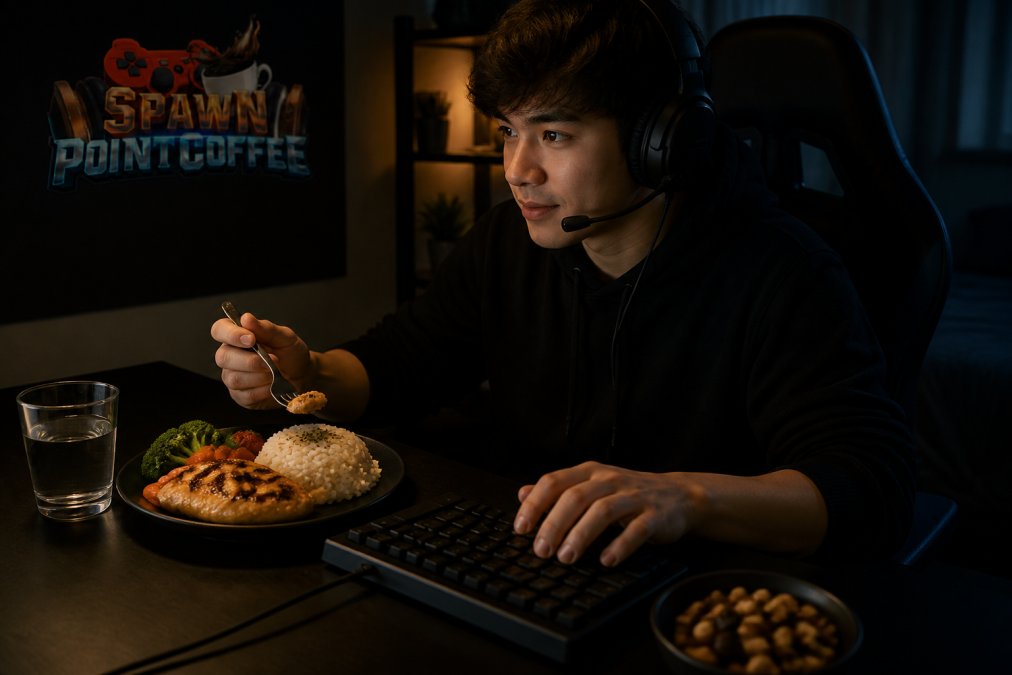
Here's a simple framework:
- Before: a balanced meal 1-2 hours out, with carbs, protein, and some fat
- During: light snacks and steady sips of water or coffee
- After: protein and carbs to refuel and recover
Post-Session Recovery Nutrition
Post-session recovery is the gap most guides skip. After a long grind, your brain and body need refueling, even if you didn't leave your chair.
Good options include:
- A protein shake with a banana
- Eggs on whole-grain toast
- Yogurt with granola
Build a Budget-Friendly Whole Food Plan for Your Game Genre
Your game genre changes what your body needs. A whole food plan costs less than a pile of supplements and works better.
| Game Genre | Main Demand | Best Fuel | Snack Pick |
|---|---|---|---|
| Fast shooters | Quick reaction time | Lean protein + complex carbs | Nuts, apple slices |
| Strategy games | Long focus | Slow carbs + healthy fats | Trail mix, yogurt |
| MMO raids | Endurance | Steady carbs + protein | Whole-grain crackers, eggs |
| Casual play | Light energy | Balanced small meals | Fruit, dark chocolate |
- Oats, rice, and whole-grain bread
- Eggs, chicken, beans, and yogurt
- Nuts, seeds, and olive oil
- Fresh or frozen fruit and vegetables
Frequently Asked Questions
What is the best diet for esports players to maintain focus?
A focus-friendly esports diet centers on steady blood sugar: whole grains, lean protein, and healthy fats at each meal, plus vegetables for micronutrients. Eat a balanced meal two to three hours before a session, then use small snacks like nuts, fruit, or yogurt to hold energy steady. Limit refined sugar and heavy fried food, which spike blood glucose and trigger the mental fatigue that ends long sessions early.
Are energy drinks the best source of fuel for gaming?
Energy drinks deliver a fast caffeine hit, but most also pack 25 to 40 grams of sugar, which spikes blood glucose and drops reaction time when it crashes. For sustained energy, coffee with controlled caffeine is easier to dose. A hyper-caffeinated medium roast like Spawn Point Coffee's Racing Fuel ($19.76 per 1 lb bag) gives a reliable lift without the sugar load you get from cans.
How can hydration improve my reaction time in-game?
Even mild dehydration, around 1 to 2 percent of body weight, measurably slows reaction time and increases perceived effort. During a marathon gaming session, sip 4 to 8 ounces of water every 30 to 60 minutes. If you sweat heavily or play in a warm room, add electrolytes to replace sodium and potassium. Keep a filled bottle at your desk so drinking is automatic, not a decision.
What nutrients are essential for eye health in gamers?
Lutein and zeaxanthin, found in spinach, kale, and eggs, filter blue light and support the macula. Omega-3 fatty acids from salmon, sardines, or walnuts support retinal health. Vitamin A and zinc also matter. Screen time raises oxidative stress in the eyes, so a diet rich in colorful vegetables and fatty fish helps offset that load. Consider a lutein supplement only if your diet falls short.
Long sessions drain even the sharpest players, and the fix isn't another energy drink. It's a real plan: steady meals, smart caffeine, and proper hydration. Spawn Point Coffee roasts gamer-focused beans on demand, with single-origin options, bold blends, and convenient pods and grind types to fit your setup. Get started with Spawn Point Coffee and fuel your next session with coffee built for the grind.