
Table of Contents
- Start With Your Taste: A Beginner's Decision Tree
- Coffee Roast Levels Explained: Light, Medium, and Dark
- Single-Origin Coffee vs. Blends: Which Should Beginners Buy?
- Whole Bean vs. Ground Coffee: Match Your Grinder and Brew Method
- How to Tell if Coffee Beans Are Fresh: Roast Dates and Storage
- A Beginner Tasting Method: Compare Two Bags Side by Side
- Common Mistakes When You Choose Coffee Beans for the First Time
- Conclusion: Your First Bag Starts Here
- Frequently Asked Questions
Last Updated: October 12, 2026
Start With Your Taste: A Beginner's Decision Tree
Learning how to choose coffee beans for beginners comes down to one question: what do you actually want in the cup? At Spawn Point Coffee, we talk to new brewers every day, and the ones who end up happy are the ones who start with taste, not labels.
Coffee beans are the roasted seeds of the coffee plant, graded by origin, species, and roast level before they ever reach a bag. That sounds like a lot. It isn't. You only need to answer three things:
- Do you like bright and fruity, or deep and chocolatey?
- Do you brew with a drip machine, a press, or an espresso setup?
- How fast will you finish a bag?
Answer those and most of the shelf eliminates itself.
Map Your Preferences to Bean Types
Use this quick map before you buy anything:
| If you like... | Look for... | Try first |
|---|---|---|
| Bright, fruity, tea-like | Light roast, single origin | A washed African or Colombian bean |
| Balanced, sweet, nutty | Medium roast, blend or single origin | Colombian or Mocha Java |
| Bold, dark, smoky | Dark roast, blend | A medium-dark or dark roast blend |
A common mistake is buying dark roast because it sounds stronger. Dark roast tastes bolder, but it also mutes the fruity notes that make single-origin coffee interesting.

Coffee Roast Levels Explained: Light, Medium, and Dark
Roast level is the single biggest flavor lever you control, and for most beginners it matters more than origin. Two beans from the same farm, roasted to different levels, will taste like two different coffees.
Here is what actually changes as a roaster pushes a batch further:
| Roast level | Typical flavor | Acidity | Body | Best for |
|---|---|---|---|---|
| Light | Fruity, floral, tea-like, sometimes tart | High | Light | Pour-over, drip, cold brew |
| Medium | Caramel, nuts, cocoa, balanced | Medium | Medium | Almost any brewer |
| Medium-dark | Dark chocolate, toasted sugar, mild smoke | Low-medium | Full | Drip, press, espresso |
| Dark | Smoke, char, bittersweet, low nuance | Low | Heavy | Espresso, press, milk drinks |
Light roast beans are pulled from the roaster shortly after first crack, the audible popping stage when moisture inside the bean turns to steam and escapes. They keep more of the bean's original acids, so they taste bright and fruity.
Medium roast sits past first crack and often into the early stages of second crack. Sugars have caramelized, so you get sweetness and body without losing all the origin character. This is the widest, most forgiving zone.
Dark roast runs well into or past second crack. The bean's internal structure has expanded and darkened, and much of the origin-specific flavor has been roasted away. What remains is roast flavor: smoke, toast, and bitterness.

Here is the part most guides skip: roast level also changes how the bean behaves in water.
A practical starting point: if you are unsure, buy a medium roast. It forgives sloppy brewing, works in every common brewer, and gives you a neutral baseline to compare future bags against.
Single-Origin Coffee vs. Blends: Which Should Beginners Buy?
Blends are the better starting point for most beginners, because a roaster builds them to taste consistent batch after batch. Single-origin coffee comes from one growing region and shows that region's character, but it also varies more from harvest to harvest.
Think of it like picking a character. A blend is the well-rounded class you can play every session. A single origin is the specialist with a high skill ceiling.
Single-origin beans are worth trying once you know what you like. Colombian beans, for example, tend to land medium-bodied with caramel sweetness and a hint of chocolate, which makes them an easy bridge from blends. Our R.P.G. Grinder single-origin Colombian follows that profile: 100% Arabica, medium body, medium-sweet acidity, one-pound bags.
Blends shine when you want the same cup every morning. They also cost less per bag on average, since roasters can balance expensive beans with cheaper ones.
Whole Bean vs. Ground Coffee: Match Your Grinder and Brew Method
Whole bean coffee stays fresh longer because the oils and aromas stay locked inside the bean. Ground coffee releases them immediately, which is why pre-ground bags go flat within a couple of weeks.
So which should you buy? Match it to your setup:
- No grinder, drip machine: buy ground, and buy small bags you'll finish fast.
- Blade grinder: buy whole bean, but expect uneven particles. Fine for press and drip.
- Burr grinder: buy whole bean. This is the setup where origin and roast differences really show.
- Espresso machine: whole bean only, ground fine right before you pull the shot.
Grind size has to match your brew method. Espresso needs a fine grind, drip wants medium, and a French press wants coarse. Get that wrong and even great beans taste bad.
How to Tell if Coffee Beans Are Fresh: Roast Dates and Storage
The roast date tells you more about freshness than any "best by" label. Most roasters agree coffee tastes best in the first two to four weeks after roasting, then fades gradually. After about six weeks, even well-stored beans taste flat compared to a fresh bag.
How to Read the Label Before You Buy
Look for a printed roast date, not a best-before date. Best-before dates are usually set months out and tell you almost nothing about when the beans were actually roasted.
R. P. G. Grinder Coffee Brew | Single Origin Colombian Coffee | Whole Bean →
A simple buying window:
- 0-7 days off roast: too fresh for some brewers. Beans are still releasing carbon dioxide, which can make espresso pull unevenly and pour-over bloom aggressively. Fine for drip and press.
- 7-21 days off roast: the sweet spot. Flavor is developed and stable.
- 21-42 days: still drinkable, but brightness and aromatics are fading.
- Past 42 days: acceptable in a pinch, but you are tasting age, not origin.
If the bag has no roast date at all, treat that as a signal. A roaster who wants you to know when the coffee was roasted will print it.
Freshness signs you can check at home:
- Whole beans smell sweet and strong when you open the bag
- Beans feel dry, not oily or sticky (oily beans are usually dark roasts or older stock)
- A freshly opened bag puffs slightly when you press it
- Ground coffee clumps instead of flowing freely
Food safety guidance on storing dry goods
How Much to Buy and How to Store It
Buy only what you will drink in two to three weeks. A one-pound bag is roughly 30 to 40 cups depending on your dose, so a daily brewer finishes it comfortably. If you brew one cup a day, a one-pound bag lasts about a month, which means you should buy half-pound bags or split the pound.
A practical storage routine tied to package size:
- Half-pound bag, daily brewer: keep it in the original bag or an airtight container on the counter. It will be gone before it stales.
- One-pound bag, daily brewer: transfer half to an airtight container and freeze the other half in a sealed bag. Pull it out when the first half runs out.
- One-pound bag, occasional brewer: split into two or three smaller airtight containers and freeze all but the one you are using.
Store beans in an airtight container, away from light and heat. Skip the fridge; moisture and food odors get in. The freezer works only if you seal the bag tight and use it within a month. Let frozen beans come to room temperature before grinding, or condensation will make them gummy.
A Beginner Tasting Method: Compare Two Bags Side by Side
Tasting two coffees side by side teaches you more in one sitting than months of reading. Set both bags on the counter, brew them the same way, and write down what you notice.
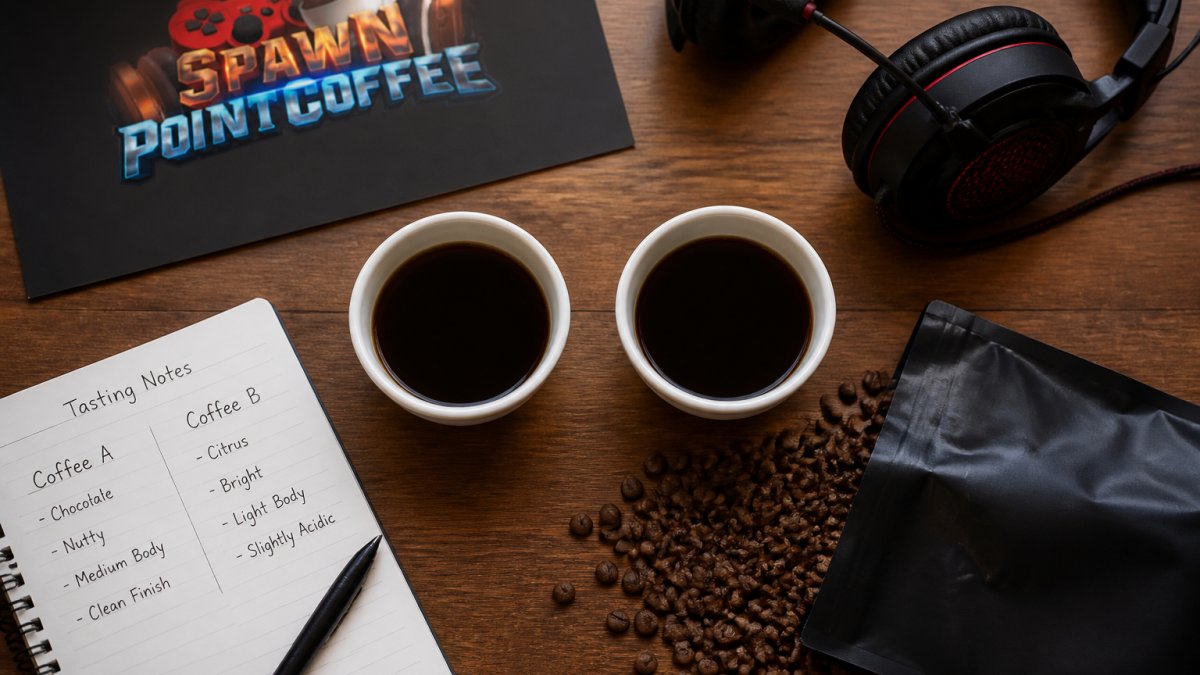
Here's a repeatable method:
- Brew both coffees with the same method, grind, and water temperature.
- Let both cups cool for five minutes. Flavors show up better warm, not scalding.
- Smell each one first, then sip.
- Score each on four things: acidity, sweetness, body, and aftertaste.
- Write one sentence per coffee. "Bright and fruity" beats "good."
Use a simple worksheet:
- Coffee A: acidity ___ / sweetness ___ / body ___ / aftertaste ___
- Coffee B: acidity ___ / sweetness ___ / body ___ / aftertaste ___
- Which did I finish first? ___
- Which would I buy again? ___
That last question matters most. Your palate is the only judge that counts.
Common Mistakes When You Choose Coffee Beans for the First Time
Buying by packaging is the most common mistake. Bold fonts and dark bags say nothing about what's inside.
Other traps to avoid:
- Chasing the darkest roast because it sounds stronger. It mostly tastes more bitter.
- Ignoring the roast date and buying whatever's on the shelf.
- Grinding a whole bag at once. Grind right before you brew.
- Changing three variables at once. Switch one thing per bag so you learn what caused the difference.
- Assuming price equals quality. Freshness and roast level matter more than price tag.
The thing nobody tells you about coffee is that your first bag is rarely your favorite. That's normal. Each bag narrows the field.
Conclusion: Your First Bag Starts Here
Picking a first bag feels like a lot of pressure, but the stakes are low. Buy fresh, buy medium roast if you're unsure, and buy whole bean if you own a grinder.
At Spawn Point Coffee, we roast on demand so your bag arrives close to its roast date, not months past it. Our lineup covers the whole beginner map: single-origin Colombian for bright, balanced cups, Mocha Java for a medium roast with cherry and dark chocolate notes, and dark roast blends for anyone who wants bold and smoky. Whole bean, ground, or pods, whichever fits your setup.

Get started with Spawn Point Coffee and find the bag you'll actually finish.
Frequently Asked Questions
What should beginners look for when buying coffee beans?
Start with three things: a roast date within the last two to four weeks, a roast level that matches your taste (medium is the safest starting point), and whole beans if you own a grinder. Check whether the bag lists the origin or blend components. Avoid bags with no roast date or vague labels like 'gourmet.' Buy a one-pound bag, brew it consistently for a week, and note what you like before buying again.
Should beginners buy whole-bean or pre-ground coffee?
Whole bean coffee stays fresh longer because the oils and aromatics are sealed inside the bean. Once ground, coffee loses noticeable flavor within days. If you own a burr grinder, buy whole bean and grind right before brewing. If you use a drip machine with a blade grinder or no grinder at all, pre-ground is fine, but buy smaller amounts and use them within two weeks. Many roasters, including Spawn Point Coffee, offer both whole bean and ground options.
How can you tell if coffee beans are fresh?
Check the roast date, not the best-before date. Roasters like Spawn Point Coffee print the roast date because coffee peaks roughly 4 to 14 days after roasting and fades after about six weeks. Fresh whole beans smell sweet and complex when you open the bag. Old beans smell flat or papery. Look for beans with a slight sheen from natural oils; a heavy oily coating usually means they sat on a shelf for months.
What is the difference between single-origin coffee and a blend?
Single-origin coffee comes from one country, region, or farm, so it tastes like that specific place: bright and fruity from Ethiopia, chocolatey and nutty from Colombia. Blends combine beans from multiple origins to create a consistent, balanced cup. Beginners often prefer blends because they are forgiving across brew methods. Single-origin is better once you want to explore specific flavor notes. Try a Colombian single-origin like Spawn Point Coffee's R.P.G. Grinder to taste the difference.